
Aug 19, 2026
.webp)
By Justin Neiman, Former Ivy League Admissions Officer

If you were rejected from Yale Early Action this year, you’re not alone. Yale’s Restrictive Early Action (REA) process is one of the most selective in the country, and even exceptional applicants are turned away. While a Yale rejection can feel discouraging, it does not define your future — and there is still a great deal you can do to strengthen your Regular Decision applications. This guide explains what a Yale EA rejection means, the latest Yale Early Action rejection and acceptance rates, and the steps you should take next.
If you applied Restrictive Early Action to Yale this fall, there are three possible outcomes:
No. Yale does not allow appeals of admissions decisions. A rejection is final. Students may reapply next year or later as transfer applicants, but appeals are not permitted.
For the Class of 2029, Yale processed 6,729 Early Action applications and accepted 728, making the Early Action admit rate 10.8%. Among the remaining applicants, 17% were deferred to Regular Decision and 71% were denied.
As difficult as it may be, the most effective step now is to redirect your energy toward the applications still ahead. Regular Decision and Early Decision II rounds give you new opportunities to shine, and most students build the bulk of their college list in this stage.
Here’s how to move forward productively:
Although you can’t change your Yale application, you can refine and strengthen the applications you’re submitting elsewhere. Here are some ways to make the most of this time:
Review your essays
• Is your Common App essay polished and reflective of your strongest story?
• Does it highlight qualities Yale may not have seen clearly?
• Are your supplemental essays personalized and specific to each college?
Refine your Application Narrative
• Check out this blog article for tips on finding your narrative.
Revisit your college list
• Is your list balanced with reach, match, and likely schools?
• Are there additional colleges that could be a great fit academically and personally?
Make meaningful updates
• Add awards, projects, leadership, or academic achievements from this fall
• Strengthen any weaker sections of your application before deadlines
Setbacks like this are hard, but they’re also an opportunity for growth. Stay proactive, keep excelling academically, and use this moment to refine your strategy. Remember, many successful students use challenges as motivation for future success.
While it may have been ideal to secure admission to your dream school before the holidays, the reality is that most students will move through the Regular Decision process. There is still so much to accomplish—so stay focused and give it your all!
• A detailed review of your Early Action application to identify weak points
• Guidance on your narrative and strategy for RD or ED II
• Support with essays, supplements, and application positioning
If you’d like support as you move forward, feel free to reach out.
This article was updated in December 2025 for the 2025-2026 Admissions Cycle.
If you were rejected from Yale Early Action this year, you’re not alone. Yale’s Restrictive Early Action (REA) process is one of the most selective in the country, and even exceptional applicants are turned away. While a Yale rejection can feel discouraging, it does not define your future — and there is still a great deal you can do to strengthen your Regular Decision applications. This guide explains what a Yale EA rejection means, the latest Yale Early Action rejection and acceptance rates, and the steps you should take next.
If you applied Restrictive Early Action to Yale this fall, there are three possible outcomes:
No. Yale does not allow appeals of admissions decisions. A rejection is final. Students may reapply next year or later as transfer applicants, but appeals are not permitted.
For the Class of 2029, Yale processed 6,729 Early Action applications and accepted 728, making the Early Action admit rate 10.8%. Among the remaining applicants, 17% were deferred to Regular Decision and 71% were denied.
As difficult as it may be, the most effective step now is to redirect your energy toward the applications still ahead. Regular Decision and Early Decision II rounds give you new opportunities to shine, and most students build the bulk of their college list in this stage.
Here’s how to move forward productively:
Although you can’t change your Yale application, you can refine and strengthen the applications you’re submitting elsewhere. Here are some ways to make the most of this time:
Review your essays
• Is your Common App essay polished and reflective of your strongest story?
• Does it highlight qualities Yale may not have seen clearly?
• Are your supplemental essays personalized and specific to each college?
Refine your Application Narrative
• Check out this blog article for tips on finding your narrative.
Revisit your college list
• Is your list balanced with reach, match, and likely schools?
• Are there additional colleges that could be a great fit academically and personally?
Make meaningful updates
• Add awards, projects, leadership, or academic achievements from this fall
• Strengthen any weaker sections of your application before deadlines
Setbacks like this are hard, but they’re also an opportunity for growth. Stay proactive, keep excelling academically, and use this moment to refine your strategy. Remember, many successful students use challenges as motivation for future success.
While it may have been ideal to secure admission to your dream school before the holidays, the reality is that most students will move through the Regular Decision process. There is still so much to accomplish—so stay focused and give it your all!
• A detailed review of your Early Action application to identify weak points
• Guidance on your narrative and strategy for RD or ED II
• Support with essays, supplements, and application positioning
If you’d like support as you move forward, feel free to reach out.
This article was updated in December 2025 for the 2025-2026 Admissions Cycle.
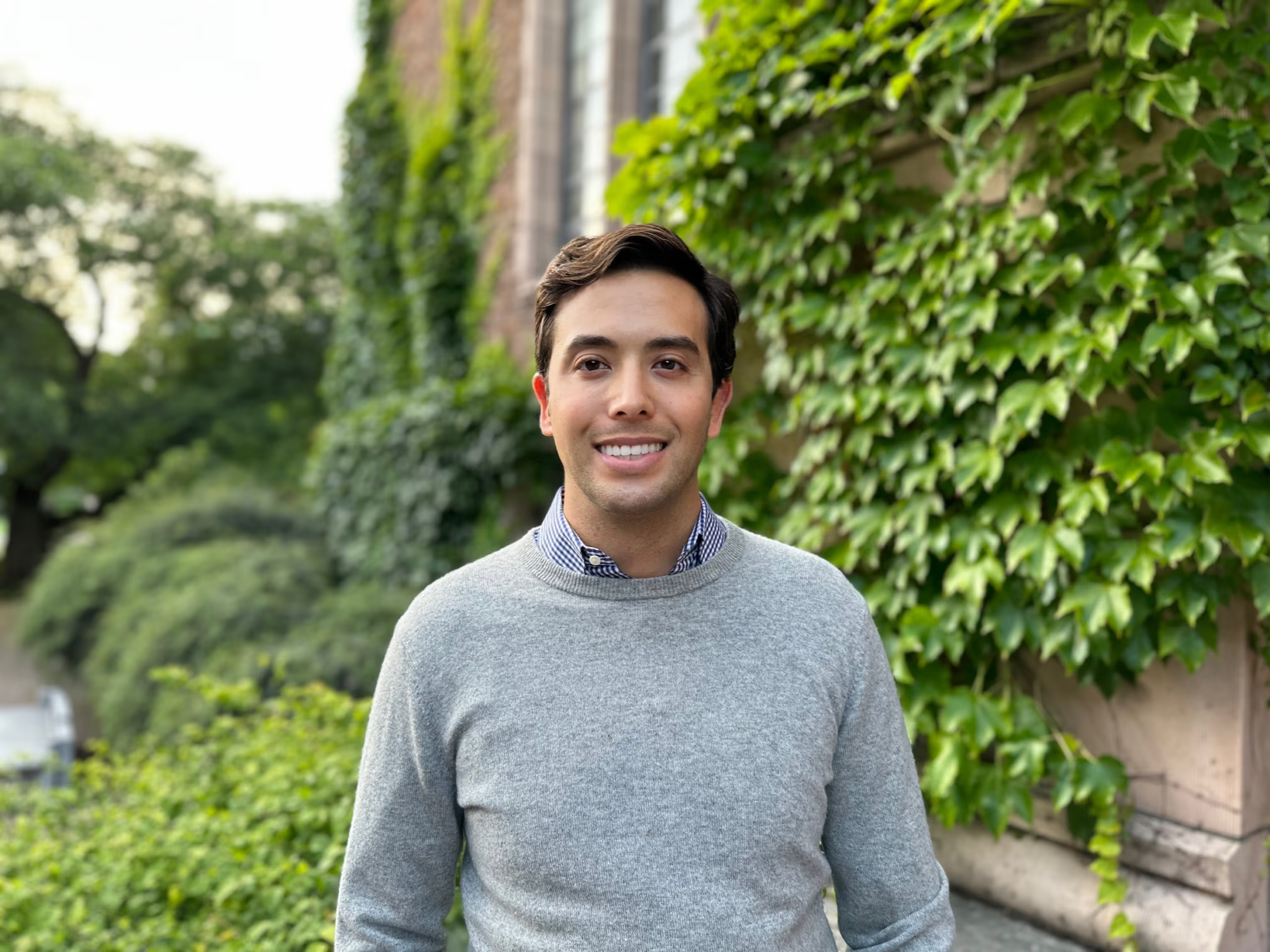
Former Admissions Officer, Harvard University
Former Assistant Dean, Stanford University
I’m a college admissions counselor and the founder of Selective Admissions. I help students navigate the college application process and position themselves as competitive applicants to top universities.

.webp)